
Returning to Exercise Postpartum: A Week-by-Week Guide to a Safe Recovery

Pregnancy and childbirth change the body in measurable, lasting ways. Muscles stretch, connective tissues soften, the pelvic floor carries increased load, and the abdominal wall adapts to support a growing baby. After delivery, many women want to “get back” to exercise quickly. But recovery is not about rushing. It is about restoring strength, coordination, and control safely.
At Corelife Wellness in Oakville, we work with women navigating postpartum recovery, bladder leaks, diastasis recti, pelvic pain, and core weakness. Whether you delivered vaginally or by C-section, a structured return to movement protects long-term pelvic health and supports confidence.
This week-by-week guide outlines what most women can safely focus on in the early months postpartum. Every body and birth experience is different, so individualized guidance from a pelvic health physiotherapy provider is strongly recommended.
Why Postpartum Recovery Needs A Plan
Research shows that up to 30–50 percent of women experience urinary incontinence after childbirth, and many continue to have symptoms months or years later if not addressed. Diastasis recti (abdominal separation) is also common in early postpartum, affecting a large percentage of women during late pregnancy and immediately after birth.
Hormonal changes, particularly the lingering effects of relaxin, continue to influence connective tissue for several months postpartum. The pelvic floor, which supports the bladder, uterus, and bowel, may also be recovering from trauma.
Jumping back into high-impact exercise too quickly can worsen:
- Bladder leaks
- Pelvic pressure or heaviness
- Core doming or abdominal separation
- Low back or hip pain
A gradual, guided progression helps restore neuromuscular control before adding intensity.
If you are searching for pelvic health physiotherapy in Oakville, Ontario, early assessment can identify issues before they become chronic.
Weeks 0–2: Rest, Breath, And Gentle Awareness
In the first two weeks postpartum, recovery is the priority.
Focus On
- Rest and sleep when possible
- Gentle diaphragmatic breathing
- Light walking around the home
- Pelvic floor connection (not aggressive strengthening)
Why Breathing Matters
The diaphragm and pelvic floor work together. When you inhale, the diaphragm lowers, and the pelvic floor lengthens. When you exhale, both gently lift. Restoring this coordination is foundational.
Try:
- Lie on your back with knees bent.
- Inhale through your nose, letting your ribs expand.
- Exhale slowly and gently engage the pelvic floor as if stopping gas or urine.
- Repeat for 5–10 breaths.
There should be no straining, no pushing through discomfort.
If you had a C-section, support the incision with a pillow during coughing or laughing.
Weeks 3–4: Rebuilding Core Connection
Around week three, many women feel slightly more mobile. This is still a recovery phase.
Add
- Short outdoor walks
- Gentle pelvic floor contractions
- Deep core activation
The deep abdominal muscle, the transverse abdominis, wraps around the torso like a support belt. Studies suggest that retraining muscle helps reduce strain on the linea alba (the connective tissue affected in diastasis recti).
Beginner Core Exercise
- Lie on your back with knees bent.
- Inhale.
- Exhale and gently draw your lower abdomen inward without holding your breath.
- Relax fully.
Avoid crunches, planks, or sit-ups at this stage.
If you notice abdominal doming, pelvic pressure, or leaking during these exercises, consult a provider offering women’s health physiotherapy services.
Weeks 5–6: Medical Clearance And Progressive Loading
Many women receive medical clearance around 6 weeks postpartum. Clearance does not automatically mean the pelvic floor and core are fully recovered.
This is the ideal time to book an assessment with a pelvic health physiotherapy clinic in Oakville.
At this stage, you may gradually introduce:
- Bodyweight squats
- Glute bridges
- Seated rows with light resistance bands
- Modified side planks (on knees)
What To Watch For
Stop and seek guidance if you experience:
- Urine leakage
- Pelvic heaviness
- Pain with movement
- Increased abdominal separation
A trained physio in Oakville can assess pelvic floor strength, coordination, and abdominal integrity before progressing.
Weeks 7–8: Building Strength Safely
If symptoms are well-managed, you can gradually increase resistance and variety of movements.
Add:
- Step-ups
- Light dumbbell exercises
- Dead bug variations
- Stationary cycling
Continue pelvic floor training. Research indicates that supervised pelvic floor muscle training is more effective than unsupervised programs in reducing urinary incontinence.
Many women assume leaks are “normal” after childbirth. While common, they are treatable.
For those experiencing bladder control challenges, non-invasive technologies such as Emsella, available at Corelife Wellness in Oakville, support pelvic floor activation without the need for internal devices.
Curious how this works in practice? Reach out to the Core Life Wellness team for a free consultation.
Weeks 9–12: Preparing For Impact
Before returning to running or high-impact workouts, your body should demonstrate:
- No leaking
- No pelvic heaviness
- No abdominal doming
- Good single-leg control
Begin low-impact cardio such as:
- Elliptical
- Brisk walking
- Light strength circuits
Readiness Test For Running
You should be able to:
- Perform 10 single-leg squats per side
- Hold a plank without doming
- Hop in place without leaking
If any symptoms appear, pause and consult a pelvic health provider.
Those searching for physiotherapy in Oakville, Ontario, should look for providers with pelvic health training rather than general physical therapy.
Months 3–6: Gradual Return To Full Activity
By 3–6 months postpartum, many women are ready for higher-intensity exercise. Progression should still be gradual.
Increase:
- Resistance
- Intensity
- Plyometric drills slowly
Continue core and pelvic floor work alongside traditional strength training.
If diastasis recti persists, treatments such as Venus Ab Rehab (Emsculpt for core strengthening) may support muscle engagement alongside physiotherapy guidance.
Special Considerations After C-Section
Recovery may require additional attention to scar mobility and abdominal strength.
Include:
- Gentle scar massage once healed
- Progressive core work
- Avoid early twisting or intense abdominal exercises
Scar restrictions can affect muscle activation patterns. Pelvic health physiotherapy can assess and treat these restrictions safely.
Red Flags: When To Seek Help
Contact a pelvic health physiotherapy clinic if you experience:
- Ongoing bladder leaks
- Pain during intercourse
- Pelvic heaviness
- Persistent abdominal bulging
- Low back pain that worsens with exercise
In Oakville and Burlington, women have access to targeted pelvic health solutions designed specifically for postpartum recovery.
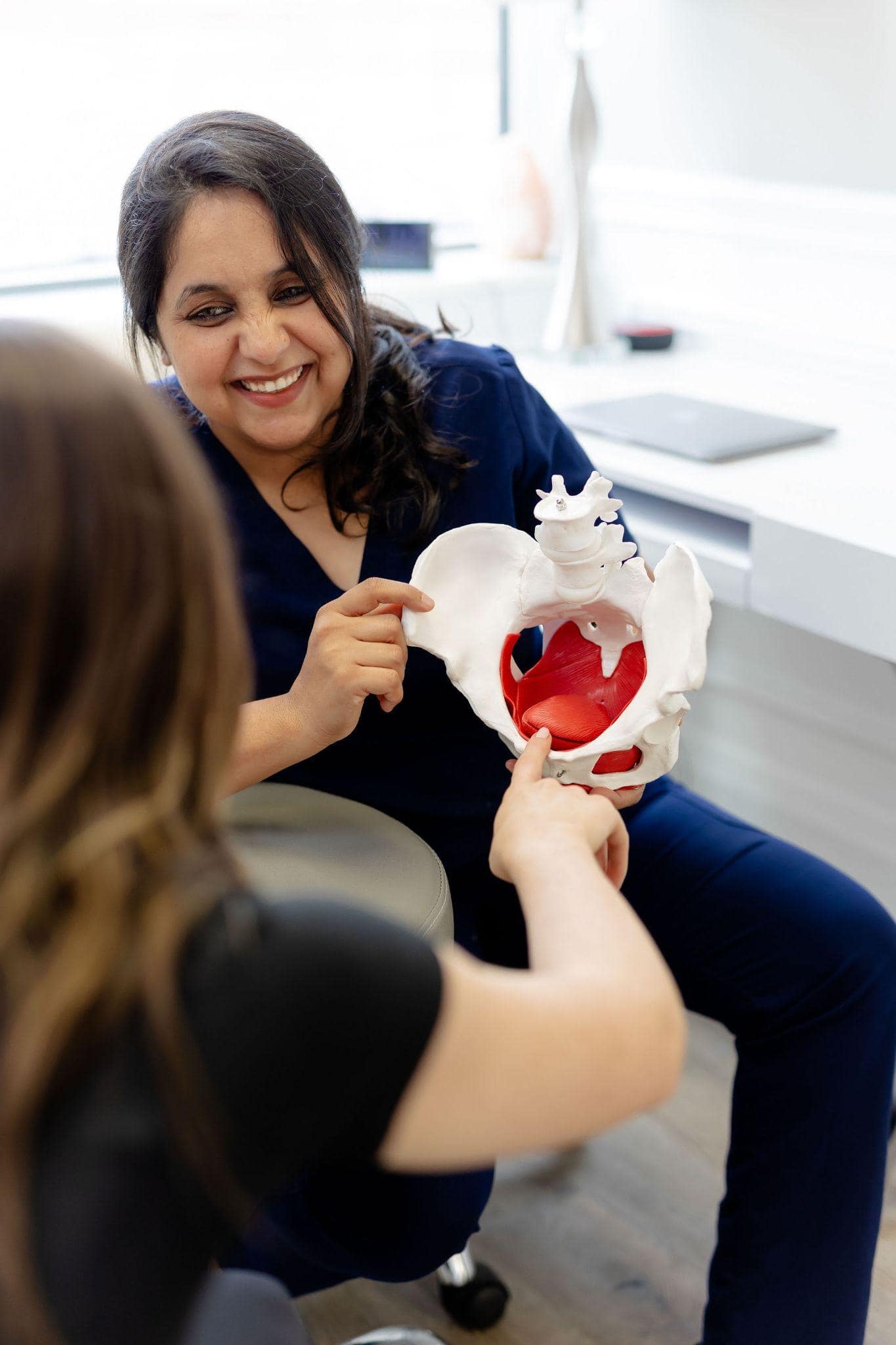
The Role Of Pelvic Health Physiotherapy
Pelvic health physiotherapy differs from general physiotherapy. It focuses on:
- Pelvic floor assessment
- Core coordination
- Diastasis recti measurement
- Bladder and bowel function
- Movement pattern correction
Research supports early postpartum pelvic floor rehabilitation to improve muscle strength and reduce long-term dysfunction.
If you are searching for:
- Physio in Oakville
- Physiotherapy clinics in Oakville
- Pelvic health physiotherapy
- Physical therapy Oakville
Choose a clinic that specializes in women’s pelvic health rather than general musculoskeletal care.
Why Local Care Matters In Oakville And Burlington
Postpartum recovery benefits from continuity and follow-up. Local care ensures:
- Consistent reassessment
- Progressive exercise adjustments
- Access to in-clinic technologies
- Support close to home
Corelife Wellness provides pelvic health physiotherapy in Oakville, Ontario, serving women from Oakville and Burlington who want structured recovery and long-term strength.
Postpartum Recovery Is Not A Race
Social media often promotes rapid “bounce back” transformations. Evidence-based recovery focuses instead on:
- Function
- Symptom prevention
- Core integrity
- Long-term pelvic health
Strong foundations reduce the risk of prolapse, incontinence, and chronic pain later in life.
Frequently Asked Questions
When Can I Start Running Postpartum?
Typically, around 12 weeks or later, provided you have no pelvic floor symptoms and have built sufficient strength.
Are Kegels Enough?
Kegels are helpful, but pelvic floor rehabilitation also includes coordination, relaxation, and integration with the core.
Is Bladder Leakage Normal?
Common, yes. Normal long-term, no. It is treatable.
Take The Next Step Toward Safe Recovery
Returning to exercise postpartum should feel empowering, not uncertain. A week-by-week approach allows your body to rebuild strength gradually while protecting pelvic health.
If you are experiencing bladder leaks, diastasis recti, pelvic discomfort, or core weakness in Oakville or Burlington, professional guidance makes a difference.
Corelife Wellness offers science-backed pelvic health physiotherapy, Emsella for bladder control, and core rehabilitation programs designed specifically for postpartum and perimenopausal women.
Visit http://www.corelifewellness.ca to book an assessment and begin a structured, supported return to exercise. Your recovery deserves more than guesswork.
Want to learn more about how Core Life Wellness can help? Get in touch with us for a free consultation.
Ready to explore your treatment options? Reach out at www.corelifewellness.ca/contact and we’ll walk you through it.
Recent Comments