
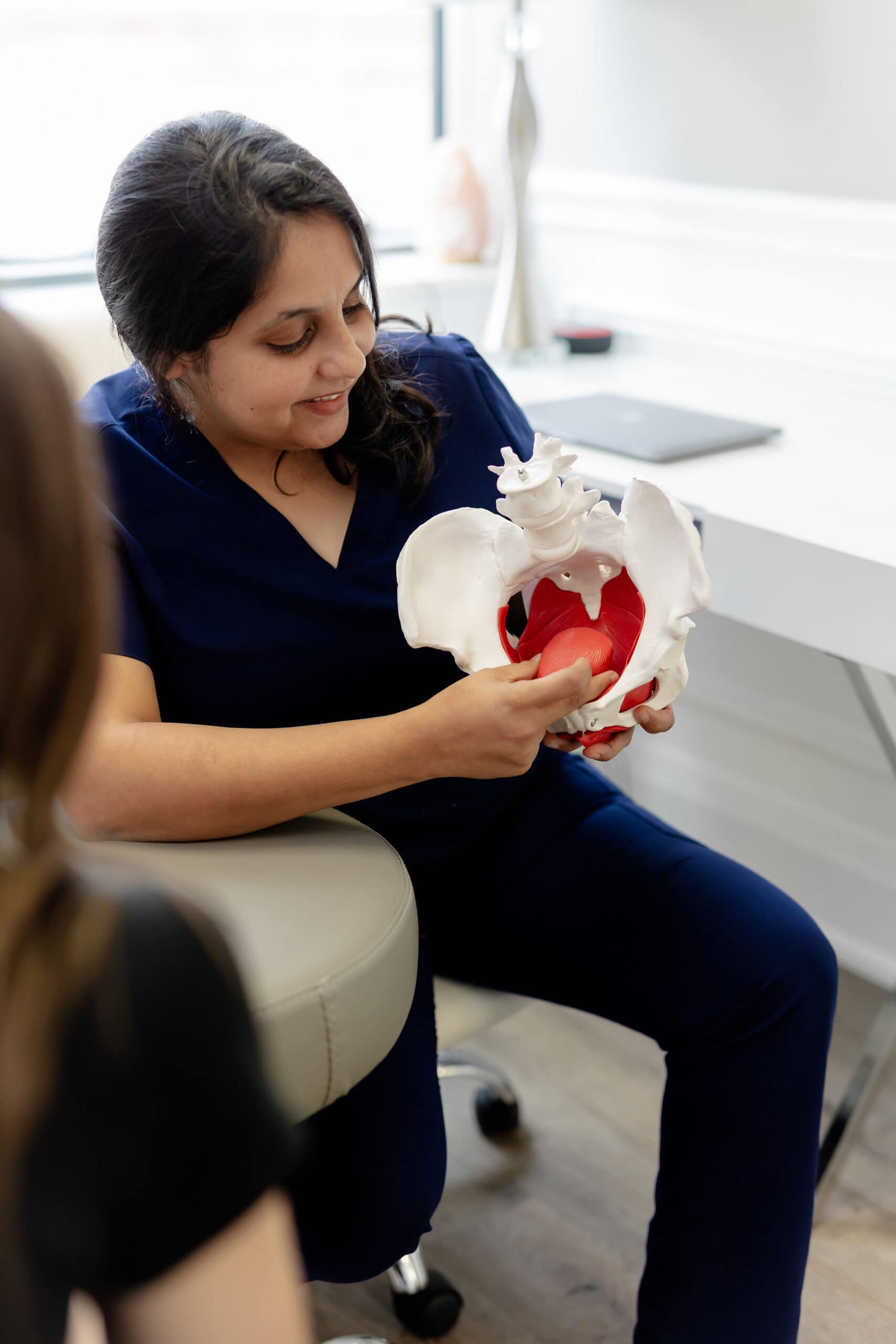
Pelvic health isn’t often talked about until it becomes impossible to ignore. For many women and some men, pelvic organ prolapse (POP) is a hidden issue that can drastically impact daily life. Whether you’re a new mom navigating postpartum recovery or navigating the changes of perimenopause, understanding what pelvic organ prolapse is and what you can do about it is key to regaining control and confidence.
In this comprehensive guide, we’ll explain what pelvic organ prolapse is, its causes, how to recognize its symptoms, and the latest non-surgical pelvic health solutions, particularly for those seeking pelvic health physiotherapy in Oakville and Burlington.
What Is Pelvic Organ Prolapse?
Pelvic organ prolapse happens when one or more organs in the pelvis, like the bladder, uterus, or rectum, drop from their normal position and bulge into the vaginal canal. This occurs due to weakened or stretched pelvic floor muscles and connective tissue.
It’s more common than you think. According to the American Urogynecologic Society, nearly 50% of women who have given birth vaginally may experience some degree of prolapse during their lifetime. However, not everyone notices symptoms right away.
Types of Pelvic Organ Prolapse
There are several types of prolapse, depending on which organ is involved:
Cystocele (Bladder Prolapse)
The bladder pushes into the front wall of the vagina.
Rectocele (Rectal Prolapse)
The rectum bulges into the back wall of the vagina.
Uterine Prolapse
The uterus drops into the vaginal canal.
Enterocele
The small intestine descends between the rectum and the vagina.
Vaginal Vault Prolapse
Often occurs after a hysterectomy, where the top of the vagina falls inward.
Each type may feel slightly different, but it stems from similar underlying muscle and ligament weaknesses.
What Causes Pelvic Organ Prolapse?
Pelvic organ prolapse is usually the result of increased pressure on the pelvic floor over time or after a significant event. Some common contributing factors include:
1. Pregnancy and Childbirth
Vaginal deliveries, especially those involving prolonged pushing or forceps, can overstretch or tear pelvic floor muscles.
2. Menopause
Reduced estrogen levels affect the strength and elasticity of pelvic tissues.
3. Chronic Strain
Conditions like chronic constipation, persistent coughing, or heavy lifting may increase intra-abdominal pressure and weaken support structures.
4. Genetics
Some people are born with weaker connective tissue that predisposes them to prolapse.
5. Obesity or High Body Weight
Added pressure on the pelvic floor may increase the risk of POP.
6. Previous Pelvic Surgeries
Surgeries like hysterectomies can disrupt typical support structures.
Recognizing the Symptoms
Not everyone with prolapse has symptoms. However, when symptoms do occur, they may include:
- A feeling of heaviness or pressure in the pelvic area
- A bulge in the vaginal canal that may be felt or seen
- Urinary incontinence or difficulty emptying the bladder
- Constipation or straining during bowel movements
- Pain or discomfort during intercourse
- Lower back pain or pelvic discomfort when standing for long periods
The severity of symptoms often does not correlate with the degree of prolapse. Even mild prolapse can feel disruptive.
When Should You Seek Help?
If you notice changes in bladder or bowel habits, discomfort in your pelvic area, or a visible bulge, it’s time to get a professional assessment. Early intervention can prevent symptoms from worsening and help avoid unnecessary surgery.
Many people in Oakville, Burlington, and surrounding areas delay seeking help due to embarrassment or uncertainty. At Corelife Wellness, we make it easy to start the conversation in a private, welcoming, and judgment-free space.

Diagnosing Pelvic Organ Prolapse
Pelvic organ prolapse is typically diagnosed during a pelvic exam by a physician, gynecologist, or trained pelvic floor physiotherapist. Depending on your symptoms, your provider may also recommend:
- Bladder testing to assess function
- Ultrasound or MRI to visualize pelvic structures
- POP-Q grading system to classify severity
These assessments help guide the development of a treatment plan tailored to your lifestyle, goals, and health history.
Treatment Options for Pelvic Organ Prolapse
The good news? Surgery is not the only option.
At Corelife Wellness, we specialize in non-invasive and evidence-based pelvic health treatments that help clients improve function and feel confident again without going into surgery.
Here are the most common treatment options:
1. Pelvic Health Physiotherapy (Physio Oakville)
First-line treatment recommended by medical guidelines.
A trained pelvic floor physiotherapist can assess muscle tone, coordination, and endurance of your pelvic floor, and develop a tailored exercise program to improve strength and function. This may include:
- Pelvic floor exercises (often called Kegels, but more tailored)
- Core muscle retraining
- Biofeedback or electrical stimulation (when needed)
- Breathing and posture techniques
- Education on activity modifications
If you’re searching for pelvic health physiotherapy in Oakville or Burlington, Corelife Wellness offers expert support in a welcoming, warm environment.
2. Emsella® Treatment (Bladder & Core Strengthening)
Often referred to as the “Kegel chair,” Emsella utilizes High-Intensity Focused Electromagnetic (HIFEM) technology to stimulate the deep pelvic floor muscles while you sit fully clothed. One session is equivalent to over 11,000 supramaximal contractions – significantly more than you could achieve on your own.
Corelife uses Emsella in tandem with pelvic physio, making it especially helpful for:
- Stress urinary incontinence
- Mild pelvic organ prolapse
- Core instability postpartum or post-menopause
3. Diastasis Recti & Core Rehab (Venus Ab Rehab)
Many postpartum women with prolapse also have diastasis recti, a separation of the abdominal muscles that affects core strength and pelvic support.
Corelife Wellness offers a program called Venus Ab Rehab (using EMSculpt technology), which helps:
- Rebuild abdominal muscle tone
- Close the abdominal gap
- Improve posture and functional strength
- Support overall pelvic stability
4. Lifestyle Adjustments & Preventative Support
Small changes can support your recovery and help prevent further strain:
- Avoid chronic constipation: add fiber, hydrate, and reposition on the toilet
- Learn how to lift safely and engage your core
- Manage chronic cough or allergies
- Consider weight management if needed
Your therapist at Corelife Wellness will guide you through these with practical, personalized advice.
5. Pessary Fitting
In moderate-to-severe cases, your physician or pelvic health provider may recommend a vaginal pessary to support the prolapsed organs. We often coordinate care with your medical provider or care team to ensure your pelvic floor muscles remain supported and strengthened.
Why Local Expertise Matters
If you’re searching for pelvic health solutions in Mississauga, Oakville, or Burlington, the care you choose matters. At Corelife Wellness, we blend modern physiotherapy, medical technology, and compassionate guidance to help you reclaim function without shame, surgery, or guesswork.
We’ve helped hundreds of clients across Southern Ontario reduce symptoms and feel better in their bodies through programs backed by science and led by experts specializing in women’s health physiotherapy and pelvic floor therapy.
What Makes Corelife Wellness Different?
- Experienced Pelvic Health Physiotherapists
- Health Canada-Approved Treatments like Emsella and Emsculpt
- Private, Comfortable Setting in Oakville (At 3075 Hospital Gate)
- Evidence-Based Support for Bladder Control, Prolapse, and Core Rehab
- Customized Plans for Your Life Stage and Goals
- Trusted by Clients Across Oakville, Burlington, and Mississauga
FAQs: What Clients Often Ask
Is pelvic organ prolapse permanent?
Not necessarily. With the right therapy and lifestyle support, many people see significant improvement even without surgery.
Does pelvic floor physiotherapy really work?
Yes. Research indicates that targeted pelvic floor training can help reduce prolapse symptoms and improve quality of life, particularly when initiated early.
A 2021 Cochrane Review found that pelvic floor muscle training is effective in reducing the symptoms and severity of pelvic organ prolapse.
Can I still exercise with prolapse?
Yes, but some movements may need to be modified. We’ll guide you in building a safe and effective movement routine.

Ready to Feel Strong, Supported, and In Control Again?
Pelvic organ prolapse doesn’t have to be your new normal. Whether you’re newly postpartum, navigating perimenopause, or simply tired of worrying about leaks or discomfort, help is available.
At Corelife Wellness, we provide expert, compassionate care that meets you where you are and helps you get back to where you want to be.
Book your consultation today at corelifewellness.ca or visit our Oakville clinic, conveniently located near 3075 Hospital Gate