

Bladder leaks when laughing, sneezing, exercising, or lifting heavy objects can affect everyday confidence. These symptoms are common after childbirth, during menopause, and following certain medical procedures. However, people don’t have to accept urinary leakage as part of aging.
A pelvic floor chair offers a non-surgical treatment option designed to stimulate pelvic floor muscles and potentially improve bladder control. It may also support greater comfort during everyday physical activities.
At Corelife Wellness in Oakville, Ontario, patients can explore Emsella chair therapy alongside pelvic floor physiotherapy and other personalized pelvic health treatments.
Understanding how this technology works, who may benefit, and what research suggests can help you make an informed decision.
What Is a Pelvic Floor Chair?
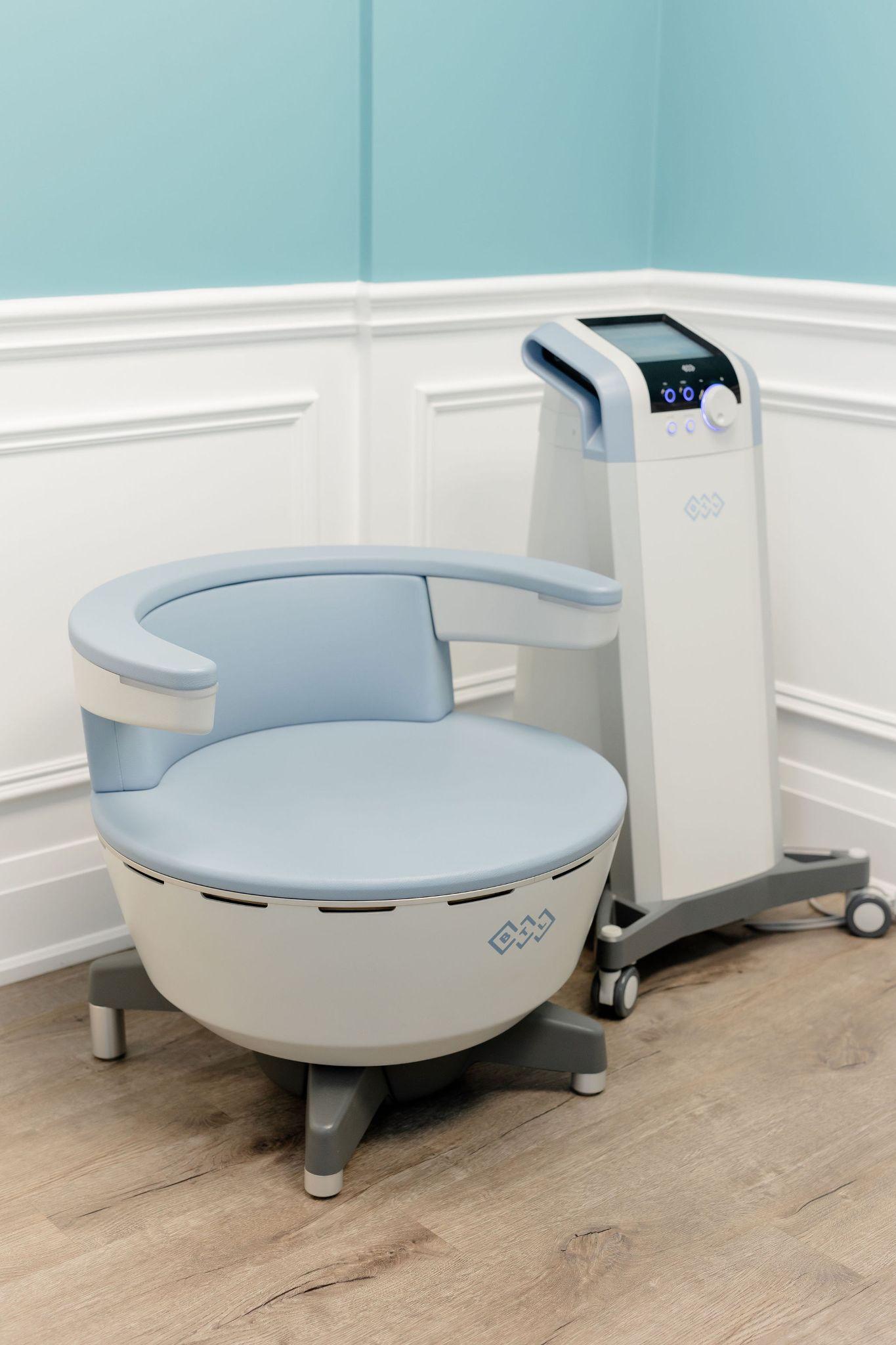
A pelvic floor chair is a specialized medical device that stimulates muscles responsible for supporting the bladder, bowel, and pelvic organs.
The BTL Emsella chair, sometimes called a Kegel chair, uses High-Intensity Focused Electromagnetic (HIFEM) technology to activate pelvic floor muscles without requiring patients to perform voluntary exercises.
These muscles support bladder control, bowel function, and pelvic stability.
Unlike traditional Kegel exercises, which involve consciously contracting and relaxing muscles, electromagnetic stimulation produces involuntary muscle contractions.
This approach may be particularly useful for people who struggle to identify or activate their pelvic floor muscles.
However, treatment suitability depends on the underlying cause of symptoms.
How Does the Emsella Pelvic Floor Chair Work?
The Emsella chair produces an electromagnetic field that stimulates the nerves that control the pelvic floor muscles.
This stimulation triggers repeated muscle contractions throughout a treatment session.
The objective is to improve muscle activation and potentially strengthen the pelvic floor over time.
What Happens During a Treatment Session?
- Initial consultation: A clinician discusses your symptoms, medical history, and treatment goals.
- Seated positioning: You sit comfortably on the chair while remaining fully clothed.
- Electromagnetic stimulation: The device produces repeated contractions of the pelvic floor muscles.
- Session completion: Treatment typically lasts approximately 28 minutes.
- Follow-up: Your clinician monitors symptoms and tailors your treatment plan.
A common treatment schedule includes six sessions over about three weeks, though individual recommendations may differ.
Patients can resume their usual activities immediately afterward.
Research Supporting Electromagnetic Treatment
A 2019 study by Samuels and colleagues investigated HIFEM technology for women experiencing urinary incontinence.
Researchers reported improvements in urinary leakage symptoms and quality-of-life measurements following treatment.
However, the study had methodological limitations, and additional independent research is necessary to establish long-term effectiveness.
What Conditions Can Emsella Therapy Help?
Emsella therapy may be considered for several conditions involving pelvic muscle weakness.
|
Condition |
Potential treatment benefit |
|
May reduce leakage during coughing, laughing, or exercise |
|
|
Postpartum pelvic weakness |
May support muscle rehabilitation following childbirth |
|
Menopause-related bladder leaks |
May improve muscle function contributing to bladder control |
|
Post-Prostatectomy Rehabilitation |
May support patients following prostate treatment |
|
Pelvic floor weakness |
May improve muscle activation when strengthening is appropriate |
|
May reduce frequent, intense, or uncontrollable urges to void |
Importantly, pelvic floor dysfunction does not always involve weak muscles.
Some individuals experience excessive muscle tension, pelvic pain, or difficulty relaxing their pelvic floor.
These conditions may require different approaches, including specialized pelvic floor physiotherapy.
Pelvic Floor Chair vs Traditional Kegel Exercises
Both approaches aim to improve pelvic floor function, but they work differently.
|
Feature |
Emsella chair |
Traditional Kegels |
|
Muscle activation |
Electromagnetic stimulation |
Voluntary contractions |
|
Clothing |
Remains on |
Remains on |
|
Treatment location |
Clinic |
Home or clinic |
|
Session duration |
Approximately 28 minutes |
Varies (a single 28-minute Emsella session provides the strengthening benefit of approximately 11,000 Kegel exercises, saving significant time) |
|
Professional assessment |
Recommended |
Recommended |
Neuromuscular Re-Education vs. Muscle Strengthening
While traditional Kegel exercises focus strictly on strengthening the pelvic floor muscles through voluntary contractions, Emsella chair therapy offers a broader scope of benefits. Emsella re-educates the pelvic muscles and the surrounding neuromuscular system by delivering targeted electromagnetic stimulation. This comprehensive stimulation helps retrain how muscles activate and communicate with the nervous system, making it valuable for comprehensive pelvic floor rehabilitation beyond basic muscle strengthening.
Traditional pelvic floor muscle training remains an established first-line treatment for many forms of urinary incontinence.
A 2018 Cochrane systematic review by Dumoulin and colleagues found that pelvic floor muscle training improved symptoms among women with urinary incontinence compared with no treatment or inactive control interventions.
These findings support the importance of structured pelvic floor exercises, particularly when supervised by qualified professionals.
Emsella therapy may complement conventional rehabilitation rather than replace it.
Is Pelvic Floor Chair Treatment Painful?
Most patients tolerate Emsella treatment without significant discomfort.
During a session, you may notice tingling, repeated contractions, or unusual sensations around the pelvic area.
Because the procedure involves no incisions, injections, or anesthesia, routine recovery time is generally unnecessary.
However, the treatment is not appropriate for everyone.
People with certain implanted electronic devices, metal implants, or specific medical conditions may not be suitable candidates. Clinicians generally avoid treatment during pregnancy.
A qualified clinician should review your medical history before treatment begins.
What Does Research Say About Long-Term Results?
Clinical research on electromagnetic pelvic floor stimulation spans several generations of medical technology.
Older clinical studies, such as a 2009 trial by Gilling and colleagues, evaluated earlier electromagnetic device designs. While early technology showed mixed results, modern systems like the BTL Emsella chair have evolved significantly in design, wave delivery, and clinical application.
Recent research focusing specifically on High-Intensity Focused Electromagnetic (HIFEM) technology, such as the 2019 study by Samuels and colleagues, demonstrates substantial improvements in muscle contraction, bladder control, and overall quality of life for patients experiencing urinary incontinence.
When evaluating medical literature, it is important to distinguish between legacy devices and today’s advanced Emsella chair therapy, which provides highly targeted and effective pelvic floor rehabilitation.
The findings demonstrate why treatment outcomes should be interpreted cautiously.
Can Men Benefit From an Emsella Chair?
Yes. Pelvic floor chair therapy may also be considered for men experiencing urinary incontinence, particularly following prostate surgery.
Pelvic floor muscles support urinary control and sexual function.
However, evidence specifically supporting Emsella for erectile dysfunction or post-prostatectomy recovery remains limited.
Men experiencing these concerns should seek medical assessment to determine appropriate treatment options.
Where Can You Find Pelvic Floor Chair Treatment Near Oakville?
Corelife Wellness provides Emsella treatment, also known as the Libby Chair, at its Oakville clinic.
The clinic welcomes patients from Burlington, Milton, Mississauga, Georgetown, and surrounding Halton communities.
Patients searching for an Emsella chair near me can explore treatment options alongside pelvic floor physiotherapy and individualized rehabilitation recommendations.
Discuss treatment costs and session requirements during consultation.

Take the Next Step Towards Better Pelvic Health
Pelvic floor chair therapy offers a non-surgical way to stimulate pelvic muscles and potentially improve bladder control.
Results vary, and an individual assessment is essential.
At Corelife Wellness, patients receive guidance on whether Emsella treatment, pelvic floor physiotherapy, or another approach best suits their needs.
Visit Corelife Wellness at 3075 Hospital Gate, Oakville, Ontario, to learn more about available pelvic health services and arrange a consultation.