
1Department of Cosmetic gynecology, Sugarland Medical Spa, Sugar Land, USA; 2Department of Obstetrics & Gynecology, Michigan Center for Women’s Health, Farmington Hills, USA; 3Department of Plastic Surgery, Julene B. Samuels MD, FACS, Prospect, KY, USA; 4Department of Urogynecology, Southern Urogynecology, West Columbia, USA; 5Department of Obstetrics & Gynecology, Gynecological Solution, Hillsborough, NJ, USA
Abstract
Objective: Weakening of the pelvic floor muscles (PFMs) may lead to urinary incontinence (UI) and female sexual dysfunction (FSD). This study investigated the long-term efficacy of HIFEM-induced PFMs strengthening to reduce UI and improve female sexual function.
Methods: Thirty-one females (47.9±8.6 years) showing UI and FSD symptoms underwent a total of six pelvic floor HIFEM treatments. These treatments were scheduled twice a week over three weeks with five follow-up visits at 1, 3, 6, 9, and 12 months. There were four different questionnaires administered: ICIQ-UI SF, FSFI, PISQ-12, and Therapy Comfort Questionnaire. Due to patients’ drop-out, data evaluation was divided into two subgroups - patients monitored from baseline to 6 months (Group A, N=31) and from baseline to 1 year (Group B, N=18).
Results: At baseline, the ICIQ-UI SF average score showed 12.1±4.8 (A) and 12.8±4.8 points (B) referring to moderate to severe UI. The severity of UI significantly (P<0.001) decreased post-treatment, and subjects achieved the greatest improvement of 71% (A, -8.6 points) and 72% (B, -9.3 points) at 6-month follow-up. At 9 and 12 months, a slight but insignificant relapse was seen in ICIQ-SF scores. FSFI baseline scores of 18.4±5.8 (A) and 19.8±4.1 points (B) improved significantly (P<0.001) after the final treatment while maintaining the level of improvement throughout the study with a maximum improvement of +9.4 (A) and +10.0 (B) points. The most prominent changes were seen in the following subdomains: Orgasm, Lubrication, Arousal, and Satisfaction, similar to PISQ-12, where patients reported higher orgasm frequency, lubrication, and sexual desire.
Conclusion: The study documents that the HIFEM procedure significantly improves the quality of life of patients who are suffering from urinary incontinence and enhances female sexual function. Achieved results were seen to be sustained in a 1-year period. Considering the patient’s needs and expectations, re-treatment may be indicated.
Keywords: FSFI, leakage, sexual disorders, pelvic floor dysfunction, sexual dysfunction, ICIQ-UI SF, orgasm, pelvic floor muscles
Introduction
Urinary incontinence (UI) is defined as any involuntary leakage of urine, and it presents a common problem among both males and females. Specific classifications include; Stress urinary incontinence (SUI) where involuntary leakage of urine manifests during physical activity due to the sudden rise of abdominal pressure, for instance, when sneezing or coughing; Urge urinary incontinence (UUI) is involuntary urine loss associated with a sudden urge to urinate, and Mixed urinary incontinence (MUI) is a combination of both [1-4]. In normal conditions, continence requires coordination between the bladder, urethra, pelvic floor muscles (PFMs), and the surrounding connective tissue; meaning urination is under voluntary control [5]. Urinary leakage is predominantly associated with damaged PFMs and disturbances in the urogenital system due to pregnancy, childbirth, aging (menopause), or other medical conditions such as obesity [6-8].
The PFMs alone have an important role in the maintenance of the continence mechanism. It forms a highly complex structure consisting of striated muscles and strong and well-conditioned PFMs are required for its proper functioning [9,10]. Because of their location inside the pelvic skeleton, the PFMs are the only muscle group in the body that provides structural support for the pelvic organs by inward lift and squeeze around the urethra, vagina, and rectum [11-13]. As childbirth injury to PFMs by stretching or tearing results in an inability to augment the support to the bladder neck during physical stress, it causes much of the pathophysiology of SUI [6].
Weakening of the PFMs of any kind has consequences in a wide range of intimate health issues. Women with pelvic floor disorders could not only suffer from UI, but they may also face impairment of sexual function, possibly developing to sexual dysfunction [14-16]. The PFMs (by both voluntary and involuntary rhythmic contractions) and perineal membrane participate in female sexual function, responsiveness, and their support has a crucial role in adequate genital arousal and attainment of an orgasm [13]. In addition, the levator ani muscle group also modulates motor responses during orgasm and vaginal receptivity. If the PFMs develop laxity and hypotonia due to the various above-mentioned factors, urinary incontinence may accompany sexual intercourse or orgasm as well [15].
First-line treatment of UI can include behavioral and PFMs training. Invasive methods such as surgery are generally recommended when physiotherapy cannot reach satisfactory results [17,18]. Surgical intervention, however, bears considerable downtime and risks, associated with this corrective approach as well as consequent tissue healing. Therefore, non-invasive therapies may precede the surgery, when they can offer a significant improvement of the treated condition or even complete recovery.
The most common non-invasive methods include pharmacologic therapy and PFMs exercise. The first approach has been widely used with varying success rates utilizing and α-adrenergic agonists, α-adrenergic antagonists, hormonal therapy, and others [19]. PFMs training, on the other hand, is widely assumed as an important component for maintaining or improving the strength of PFMs. The first exercise regime for PFMs strengthening was established by Arnold Kegel in 1948 and since it was adopted by numerous authors with varying results [20-23].
Nonetheless, the efficacy of PFMs training always relies on the patient's commitment and physical abilities to perform correct PFMs contractions. Besides regular exercise, the function of weakened PFMs can be effectively enhanced by non-invasive stimulation. Along with well-established electrical stimulation, in the treatment of patients with SUI, the HIFEM procedure is being more frequently used in recent years [24]. In contrast to electrical stimulation where the electric charge flows directly through electrode-tissue to the surface, HIFEM induces electrical currents selectively in the PFMs by a mechanism of electromagnetic induction. This technology eliminates the risk of excessive heating, associated with the use of electrodes. As the magnetic field passes through the tissue layer without attenuation of energy, the induced contractions may be achieved at greater depths, leading to greater results as shown by Silantyeva [10,25].
The previous research on HIFEM-induced PFMs strengthening was primarily focused separately on UI or sexual function treatment and was performed with short- to mid-term follow-ups at 3-6 months. In this study, the monitoring period was extended to 1 year to investigate the long-term efficiency of HIFEM for the treatment of UI with an emphasis on improving female sexual function.
Methods
Inclusion criteria and ethical consideration
Adult women suffering from specific types of UI (SUI, UUI, MUI), expressing interest and consent in treatment, were enrolled in this multi-centered, open-label, non-randomized, single-arm study. All patients were recruited from the principal investigator's existing pool and received the treatments at the principal investigator’s site. The inclusion criteria were as follows: 21 to 65 years of age, weight ≤300 lb., sexually active, with a Female Sexual Function Index (FSFI) Questionnaire score ≤26.55 points, indicating female sexual dysfunction (FSD) [26,27]. Exclusion criteria included suffering from other types of urinary incontinence other than SUI, UUI, and MUI, currently lactating, having any implants including metal or electronic implants, cardiac pacemakers and drug pumps, pregnancy, fever, recent surgical procedure, and any disorder that would interfere with study endpoints or subject safety like hemorrhagic conditions and anticoagulation therapy. The study design and treatment protocol were approved by the Advarra Institutional Review Board (ClinicalTrials.gov Identifier: NCT03942484). All patients signed an informed consent form before any study-related procedure and the study adhered to the ethical principles of the 1975 Declaration of Helsinki.
Treatment procedure
At the baseline visit patient’s medical history was reviewed. All subjects then received treatments with EMSELLA (BTL Industries Inc., Boston, MA) device using the HIFEM procedure for non-invasive electromagnetic stimulation of PFMs providing rehabilitation of weak PFMs and restoration of neuromuscular control for the treatment of urinary incontinence. The device utilizes a chair applicator where a fully clothed patient sits straight in the center, just above the stimulation coil which generates a magnetic field of 2.5 Tesla. The correct positioning is verified prior to the start of each therapy using a testing sequence with lowered pulse intensity and frequency. Treatment stimulation intensity was gradually increased on a scale of 0-100% according to the patient’s comfort. Subjects were required to complete six 28-minute treatments delivered twice per week, over three consecutive weeks, and five follow-up visits at 1, 3, 6, 9, and 12 months after the final treatment. At all treatment sessions, subjects were examined for possible adverse events or side effects in the treated area. Patients were also asked to report any sign of pain or discomfort during therapies.
Evaluation of study outcomes and data collection
Various standardized questionnaires were used for the documentation of treatment outcomes. ICIQ-UI SF (International Consultation on Incontinence Questionnaire-Urinary Incontinence Short Form) Questionnaire was used to assess any change in the subject’s urine leakage post-treatment. Validated 19-item questionnaire for evaluation of female sexual function/dysfunction (FSFI-Female sexual function index), PISQ-12 (The Pelvic Organ Prolapse/Urinary Incontinence Sexual Questionnaire) for evaluation of sexual function in women with UI and/or pelvic organ prolapse, and Therapy Comfort Questionnaire using 7-point Likert scale to assess patient’s comfort during therapy were administered. All questionnaires except the therapy comfort (completed after the last treatment only), were given to subjects at baseline, after the last treatment, and all follow-up visits.
Statistical analysis
The descriptive statistics was calculated (mean, standard deviation, median and 95% confidence intervals). All data were analyzed for statistical significance. Paired variables measured at multiple time points were tested by Repeated Measures ANOVA followed by a post-hoc Tukey HSD test and a two-sample t-test was used to analyze the significance between independent data. The missing values in the tested data sets were replaced by the group’s average value. The significance level was set to α=0.05 (5%). The complete data analysis was performed using the Real Statistics Resource Pack add-in for Microsoft Excel spreadsheet software.
Results
Thirty-one female patients aged 47.9±8.6 years reporting PFMs weakness, UI symptoms, and sexual dysfunction (FSFI baseline score <26.55) were enrolled. Therapy comfort assessment showed on average 6.4±0.9 points on the 7-point Likert’s scale, showing 93.3% of subjects agreed that the therapy was comfortable while the rest replied neutrally. In addition, no adverse events or side effects were documented throughout the study. Due to the high drop-out rate seen at the last two follow-up visits (9 months and 12 months) mostly attributed to the COVID-19 pandemic, the data evaluation was divided into two subgroups-patients monitored from baseline to 6-month follow-up (N=31, group A) and from baseline to 1 year (N=18, group B). The achieved questionnaire scores did not statistically differ between group A and B at baseline and follow-ups (P>0.05).
Group A
In general, the severity of UI significantly (P<0.001) decreased post-treatment and patients reported less leakage occurrence during certain activities especially when coughing, sneezing, or when physically active. ICIQ-UI SF baseline score (12.1±4.8 points) indicated moderate to severe UI symptoms in Group A. After finishing the 6th treatment, the score gradually decreased up to 6 months, when subjects achieved the most prominent improvement of 71.0% (-8.6 points, see Table 1 with average values and 95% confidence intervals). The observed change in the ICIQ-SF sum score was statistically significant against the baseline starting from the first post-treatment assessment. Interestingly, a significant change was also found between the data taken at 6 months and immediately after the last treatment (P=0.005).
| ICIQ-UI SF Score (CI) | |||||||
|---|---|---|---|---|---|---|---|
| Follow-up (Group) | Baseline | 6th treatment | 1 month | 3 months | 6 months | 9 months | 12 months |
| 6 months (A) | 12.1 (1.8) | 6.3 (1.7) | 4.9 (1.7) | 4.5 (1.6) | 3.5 (1.2)* | - | - |
| 12 months (B) | 12.8 (2.4) | 7.1 (2.4) | 4.9 (2.2) | 4.5 (2.1) | 3.5 (1.7)* | 3.8 (2.2)* | 4.1 (1.9)* |
| FSFI Score ± SD | |||||||
| 6 months (A) | 18.4 (2.2) | 27.0 (2.6) | 27.5 (2.4) | 27.8 (1.9) | 26.9 (2.0) | - | - |
| 12 months (B) | 19.8 (2.4) | 29.3 (2.3) | 28.2 (3.1) | 28.8 (2.4) | 28.7 (2.7) | 29.1 (2.9) | 29.8 (2.6) |
| PISQ-12 Score | |||||||
| 6 months (A) | 28.1 (2.2) | 34.7 (2.8) | 37.3 (2.6) | 38.3 (2.4)* | 37.8 (2.4)* | - | - |
| 12 months (B) | 28.5 (2.3) | 36.1 (3.3) | 37.4 (3.8) | 38.9 (3.6) | 39.1 (3.4) | 38.9 (3.7) | 39.0 (3.5) |
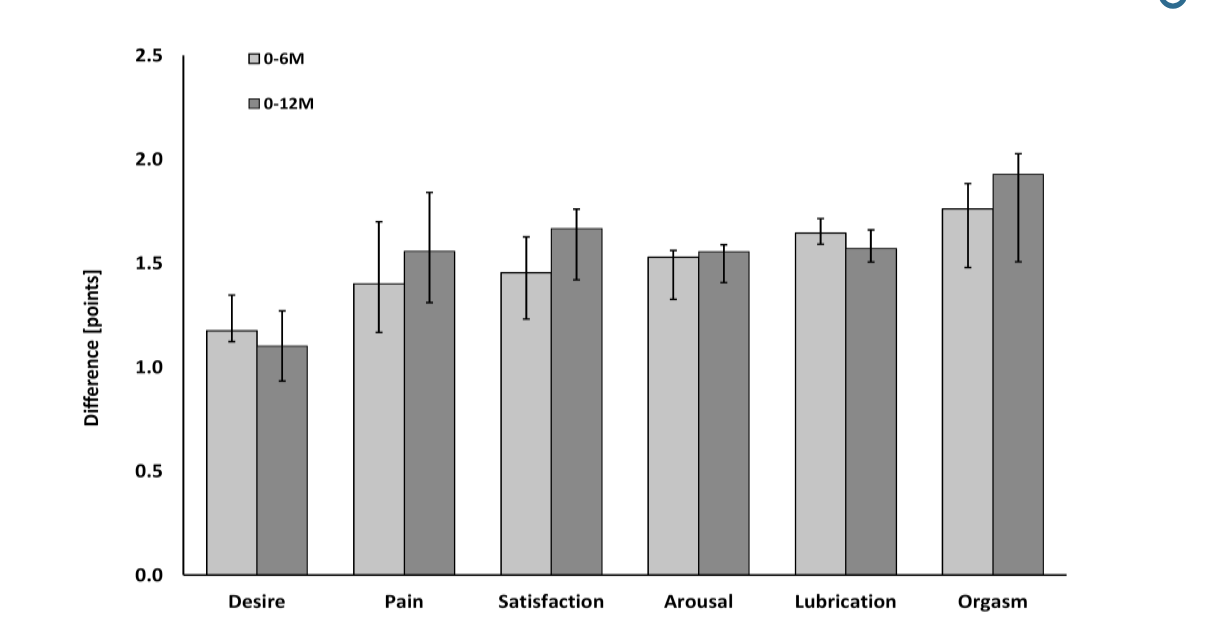
For sexual function assessment the patients who showed inconsistent sexual activity (N=2) throughout the study were excluded from FSFI and PISQ-12 questionnaire data processing. In group A, the baseline FSFI score indicated considerable impairment of sexual function with an average score of 18.4±5.8 points. The improvement was noticeable immediately after the final treatment and scores were gradually increasing up to 3 months (+9.4 points) while remaining significantly elevated at 6 months (+8.5 points). Averaging the changes in FSFI subdomains, patients mainly reported higher Orgasm frequency (average increase of 60.0±6.0%), increased Lubrication (51.6±2.1%), and increased Arousal (50.7±3.7%) as demonstrated by the most prominent changes seen when comparing following domains to baseline; for detailed changes see Figure1.
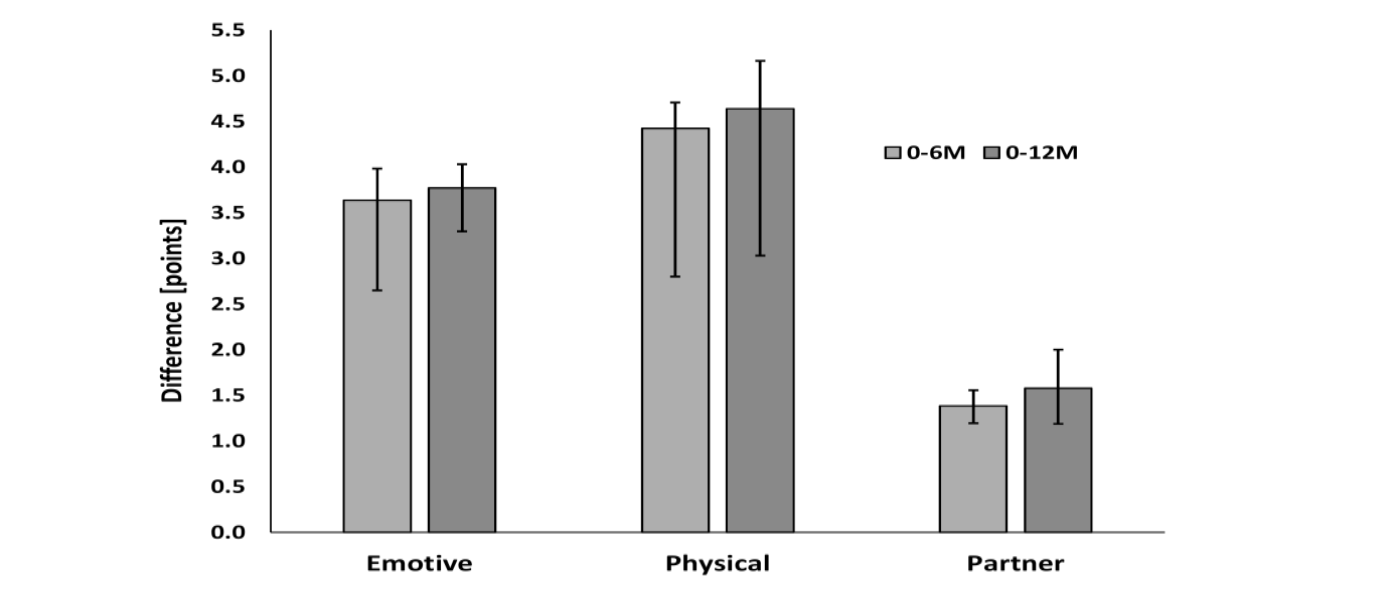
The PISQ-12 evaluation was consistent with FSFI results. The baseline scores were continuously increasing from 28.1±5.8 points, peaking at 3 months (+10.2 points) with a small yet insignificant decline at 6 months. Patients noticed the biggest improvement in the Emotive subdomain (32.5±3.8%; sum score of questions 1-4) at 3 months, for detailed changes see Fig. 2. In the Physical subdomain (+23.2±4.1%; questions 5-9) patients most frequently reported lower frequency of UI during sexual activity, not avoiding sexual intercourse because of fear or bulging in the vagina due to bladder, rectum, or vagina falling out. They also tend to have less emotional reactions such as fear, disgust, shame, or guilt.
Group B
Corresponding results were observed in group B. The ICIQ-UI SF baseline data showed a sum score of 12.8±4.8 points also referring to moderate to severe UI symptoms. Average scores again decreased up to 6 months when the greatest improvement was noticed with an average score of 3.5±3.4 points (-9.3 points, 72.5%). At 9 and 12 months, the ICIQ-SF score slightly yet insignificantly increased when compared to 6-month data, however, still showed a highly significant difference against baseline. Patients reported a decrease in urine leakage caused by physical stress, sneezing, coughing, and a lesser frequency of urination.
Data from 14 patients were taken into account when evaluating the FSFI questionnaire (two subjects reported inconsistent sexual activity and the data of one subject was incomplete). Similarly, the sample size was adjusted when evaluating PISQ-12 (N=15). FSFI score was improved immediately after the last treatment from a baseline value of 19.8±4.1 points and was maintained high (P<0.001 against baseline) up to 12 months when achieving the highest change of 29.8±4.8 points (+10.0 points). At the 12-month follow-up, the threshold for FSD (26.55 points) was maintained by 11 patients (73.3%). Subjects from Group B reported the most prominent changes in FSFI subdomains (see Fig. 1): Orgasm (+62.4±7.3%) followed by Lubrication (+46.6±2.0%), and Satisfaction (+47.8±3.7%). Lastly, the PISQ-12 baseline score was increasing from an average value of 28.5±4.4 points to 39.1±6.2 points (+10.6 points) at 6 months and then maintained for 1 year at a similar level. The highest progress was also achieved in the Emotive (+33.5±1.6% on average) and Partner-related (+24.5±3.4% on average) subdomains (Figure 2). In general, patients reported higher orgasm frequency, excitement, and satisfaction with their sexual life.
Discussion
The symptoms of UI and FSD were alleviated after the rPMS as demonstrated in this study and evaluated by ICIQ-UI SF, FSFI, and PISQ-12 questionnaires. The most prominent improvement of UI was observed at 6 months in both groups when the ICIQ-SF score decreased by 71.0% (A) and 72.5% (B), respectively. Subjects from both groups referred to less occurrence of urine leakage when sneezing, coughing, or exercising. At 12 months the ICIQ-UI SF score slightly increased, however, the improvement was still showing high significance (P<0.001) against the baseline.
Enhancement of sexual function assessed by FSFI questionnaire peaked at 3 months in Group A, while showing continuously elevated FSFI score throughout the duration of the study with the maintenance of the outcomes up to 12 months. Additionally, at the 12-month follow-up, no FSD symptoms were observed in 11 out of 15 subjects. Such results imply a noticeable shift in the quality of the subject’s sexual life, improving most in orgasm, lubrication, and arousal subdomains. The corresponding results were found by assessing the PISQ-12 questionnaire in both groups as patients reported increased sexual desire, higher orgasm frequency, and general enhancement of satisfaction in a variety of sexual activities. In conclusion, by targeting PFM, the long-term data documented significant and sustained improvement of sexual function. The slight fluctuation in scores observed throughout the study and between the groups may be explained by unequal sample size and various magnitudes of individual results seen in particular subjects. The observed advancement of sexual function is supposed to be related to better PFMs function and strength as documented by previous authors [3,10,13,25].
From the patient perspective, it always matters whether the effect supposedly delivered by the treatment procedure is apparent and clinically meaningful. Therefore, the concept of minimal clinically important difference (MCID) was introduced, in order to determine the least threshold of beneficial outcomes. Previous research identified that the MCID for the ICIQ-UI SF questionnaire may lie in the range of 2.5 to 5.0 points [28,29]. Considering the more stringent threshold value of 5 points, we may conclude that decreased severity of incontinence achieved in our study was clinically significant. Particularly, the minimal difference in ICIQ-UI SF score equaled on average -5.8 points for both, groups A and B. This also indicates that the incontinence severity of treated subjects in general changed from moderate or severe UI at baseline to mild symptoms at follow-ups. The MCID range for the change in the FSFI questionnaire was identified as 2.1-4.0 points which are again notably overstepped by the results documented in this study, where a minimum change in FSFI score was on average +8.5 points (A) and +8.4 points (B), respectively. Lastly, as estimated by Mamik, the MCID for the PISQ-12 questionnaire may be considered as a positive increase by 6 points [30-32]. When compared to minimum PISQ-12 changes observed in Group A (+6.6 points) and Group B (+7.6), it infers the clinically significant improvement of sexual function in subjects suffering from UI.
Similar long-term outcomes were demonstrated by Lim when observing the effect of pulsed magnetic stimulation for SUI treatment by the ICIQ-SF UI questionnaire. In their study, subjects were allocated into four groups: sham (16 treatments), active (16 treatments), sham + additional sessions (32 treatments), and active + additional sessions (32 treatments). At 14 months, based on the subject’s allocation, the ICIQ-UI SF score showed a significant decrease in the range of 3.5 points to -7.1 points, while the best results were seen in the active group. When compared to the results of this study, the observed difference at 12 months was -8.7 points which corresponds, yet noticeably surpasses, the outcomes documented by Lim [33]. However, the level of improvement in their study was observed after the administration of 16 treatments. The noticeable effect in this study occurred only after six HIFEM treatments, inferring its higher effectivity when addressing SUI.
In-long term, surgery is also considered as one of the effective means to treat UI and impaired sexual function, however, it comes with incontrovertible risks and downtime [17]. Herein documented results evidence the considerable effectiveness of non-invasive HIFEM procedure on UI and sexual function in a 12-month time span with no adverse effects and discomfort, possibly encouraging patient interest in non-invasive treatment options. Although the data from questionnaires related to sexual function plateau at a certain level, still maintaining a high degree of improvement up to 1 year, the ICIQ-UI SF sum score showed a slight relapse at 9 and 12 months. Given the holistic approach of medical care, while considering the condition and needs of every patient, this may indicate that to maintain the full benefits of the treatment, a retreatment procedures can be scheduled within 12-24 months after the initial treatments.
The principal mechanism that promotes the changes in leakage severity and sexual function post-HIFEM procedure is the strengthening and re-education of PFMs. Since the investigated device allows for non-invasive stimulation and strengthening of pelvic floor muscles, no special collaboration is needed from the treated subjects. Another approach is voluntary PFM exercise, which is often recommended as first-line treatment for UI, and coincided with positive but variable results in the past [20,34,35]. The greatest limitation of voluntary exercise may be seen in the lack of control for selectivity and actual strength of PFMs contractions performed by the subject themselves. Due to the selective stimulation of neuromuscular tissue by alternating electromagnetic fields; HIFEM is able to completely overcome this issue by triggering the supramaximal PFM contractions. As recent findings from Silantyeva suggest, induced supramaximal contractions lead to better integrity of PFMs while increasing their activity and endurance [10,25]. However, a further comparison of the HIFEM procedure and PFM voluntary exercise is needed to exactly identify the differences between both approaches.
The original study on the efficacy and safety of the HIFEM procedure was performed by Samuels, observing the treated subjects for 3-months post-HIFEM. The study documented a similar yet slightly less reduction in urine leakage severity through the ICIQ-UI SF questionnaire (+6.4 points) coinciding with an improvement in the patient's quality of life, including sexual function [3]. Their patients described beneficial changes as better control over urination throughout the day and night and increased sexual desire with more intense orgasm - similar to findings documented in our study by the means of FSFI and PISQ-12 questionnaires. Hlavinka tested the efficiency of HIFEM technology in the treatment of weak PFMs as a cause of female sexual dysfunction and at a 3-month follow-up, they documented a 53% average improvement in FSFI score attributed to an increase in PFMs strength. In our study, the most prominent changes were also seen at 3 months by 51.5% improvement in group A, which coincides with Hlavinka findings, however, this study showed that such effects may be maintained for a much longer period of time [13].
The greatest limitation is certainly the patients' drop-out rate, mostly attributed to the COVID-19 pandemic, since only 18 subjects completed 12-month follow-up visits. Nonetheless, due to the multiple questionnaires used, the consistency of observed outcomes might be evident despite the lower number of patients at final follow-ups. In future studies, the means of retention of sample size and risk analysis for possible drop-out should be emphasized when performing such long-term observations. Also it would be interesting to provide a further comparison of the HIFEM procedure and PFMs exercise itself using objective measures.
The obtained data indicates the long-term efficiency of the HIFEM procedure for the reduction of urinary incontinence while improving female sexual function. Study subjects noticed a significant enhancement and better control of urine leakage while reporting more frequent orgasms and increased lubrication during sexual intercourse maintained up to 1 year after the final treatment. Considering the patient’s needs and expectations, a re-treatment period may be indicated. Yet, based on these findings we suggest HIFEM as an effective tool for the treatment of UI and FSD and a promising alternative to existing treatment options.
References
- Nygaard IE, Heit M. Stress urinary incontinence: Obstetrics & gynecology. 2004;104(3):607-620.
- Saboia DM, Firmiano MLV, Bezerra K de C, Vasconcelos Neto JA, Oriá MOB, Vasconcelos CTM. Impacto dos tipos de incontinência urinária na qualidade de vida de mulheres. Rev Esc Enferm USP. 2017;51(0).
- Samuels JB, Pezzella A, Berenholz J, Alinsod R. Safety and efficacy of a non-invasive high-intensity focused electromagnetic field (hifem) device for treatment of urinary incontinence and enhancement of quality of life. Lasers Surg Med. 2019;51(9):760-766.
- Wood LN, Anger JT. Urinary incontinence in women. BMJ. 2014;349.
- Strohbehn K. Normal pelvic floor anatomy. Obstet Gynecol Clin North Am. 1998;25(4):683-705.
- Norton P, Brubaker L. Urinary incontinence in women. Lancet. 2006;367(9504):57-67.
- Price N, Dawood R, Jackson SR. Pelvic floor exercise for urinary incontinence: A systematic literature review. Maturitas. 2010;67(4):309-15.
- Rortveit G, Daltveit AK, Hannestad YS, Hunskaar S. Urinary incontinence after vaginal delivery or cesarean section. New Eng J Med. 2003;348(10):900-7.
- Chamochumbi C, Nunes FR, Guirro RR, Guirro EC. Comparison of active and passive forces of the pelvic floor muscles in women with and without stress urinary incontinence. Braz J Phys Ther. 2012;16:314-9.
- Silantyeva E, Zarkovic D, Astafeva E, Soldatskaia R, Orazov M, Belkovskaya M, et al. A comparative study on the effects of high-intensity focused electromagnetic technology and electrostimulation for the treatment of pelvic floor muscles and urinary incontinence in parous women: analysis of posttreatment data. Female Pelvic Med Reconstr Surg. 2021;27(4):269.
- Bharucha AE. Pelvic floor: anatomy and function. Neurogastroenterol Motil. 2006;18(7):507-519.
- Bø K. Pelvic floor muscle training is effective in treatment of female stress urinary incontinence, but how does it work? Int Urogynecol J Pelvic Floor Dysfunc. 2004;15(2):76-84.
- Hlavinka TC, Turcan P, Bader A. The use of HIFEM technology in the treatment of pelvic floor muscles as a cause of female sexual dysfunction: A multi-center pilot study. J Women's Health Care. 2019;8(455):2167-0420.
- Elneil S. Complex pelvic floor failure and associated problems. Best Pract Res Clin Gastroenterol. 2009;23(4):555-73.
- Berman JR, Goldstein I. Female sexual dysfunction. Urol Clin North Am. 2001;28(2):405-416.
- Aslan E, Fynes M. Female sexual dysfunction. Int Urogynecol J. 2008;19(2):293-305.
- Labrie J, Berghmans BL, Fischer K, Milani AL, Van Der Wijk I, Smalbraak DJ, et al. Surgery versus physiotherapy for stress urinary incontinence. N Engl J Med. 2013;369(12):1124-33.
- Sung VW, Borello-France D, Newman DK, Richter HE, Lukacz ES, Moalli P, et al. Effect of behavioural and pelvic floor muscle therapy combined with surgery vs surgery alone on incontinence symptoms among women with mixed urinary incontinence: the ESTEEM randomized clinical trial. JAMA. 2019;322(11):1066-76.
- Rovner ES, Wein AJ. Treatment options for stress urinary incontinence. Rev Urol. 2004;6(Suppl 3):S29-S47.
- Kegel AH. Progressive resistance exercise in the functional restoration of the perineal muscles. AJOG. 1948;56(2):238-248.
- Harvey MA. Pelvic floor exercises during and after pregnancy: a systematic review of their role in preventing pelvic floor dysfunction. J Obstet Gynaecol Can. 2003;25(6):487-498.
- Cavkaytar S, Kokanali MK, Topcu HO, Aksakal OS, Doğanay M. Effect of home-based Kegel exercises on quality of life in women with stress and mixed urinary incontinence. Null. 2015;35(4):407-410.
- Bø K, Herbert RD. There is not yet strong evidence that exercise regimens other than pelvic floor muscle training can reduce stress urinary incontinence in women: a systematic review. J Physiother. 2013;59(3):159-168.
- Amaro JL, Gameiro MO, Padovani CR. Effect of intravaginal electrical stimulation on pelvic floor muscle strength. Int Urogynecol J. 2005;16(5):355-358.
- Silantyeva E, Dragana Z, Ramina S, Evgeniia A, Orazov M. Electromyographic evaluation of the pelvic muscles activity after high-intensity focused electromagnetic procedure and electrical stimulation in women with pelvic floor dysfunction. Sex Med. 2020;8(2):282-289.
- Meston CM. Validation of the Female Sexual Function Index (FSFI) in women with female orgasmic disorder and in women with hypoactive sexual desire disorder. J Sex Marital Ther. 2003;29(1):39-46.
- Rosen R, Brown C, Heiman J, Leiblum S, Meston C, Shabsigh R, et al. The female sexual function index (FSFI): a multidimensional self-report instrument for the assessment of female sexual function. J Sex Marital Ther. 2000;26(2):191-208.
- Nyström E, Sjöström M, Stenlund H, Samuelsson E. ICIQ symptom and quality of life instruments measure clinically relevant improvements in women with stress urinary incontinence. Neurourol Urodyn. 2015;34(8):747-751.
- Sirls LT, Tennstedt S, Brubaker L, Kim HY, Nygaard I, Rahn DD, et al. The minimum important difference for the International Consultation on Incontinence Questionnaire—Urinary Incontinence Short Form in women with stress urinary incontinence. Neurourol Urodyn. 2015;34(2):183-7.
- Uren AD, Cotterill N, Pardoe M, Abrams P. The International Consultation on Incontinence Questionnaires (ICIQ): An update on status and direction. Neurourol Urodyn. 2020;39(6):1889-1896.
- Althof S, Derogatis LR, Greenberg S, Clayton AH, Jordan R, Lucas J, et al. Responder analyses from a phase 2b dose-ranging study of Bremelanotide. J Sex Med. 2019;16(8):1226-1235.
- Mamik MM, Rogers RG, Qualls CR, Morrow JD. The minimum important difference for the Pelvic organ prolapse-urinary incontinence sexual function questionnaire. Int Urogynecol J. 2014;25(10):1321-1326.
- Lim HW. Effects of facial exercise for facial muscle strengthening and rejuvenation: Systematic review. J Kor Phys Ther. 2021;33(6):297-303.
- Bø K, Talseth T, Holme I. Single blind, randomised controlled trial of pelvic floor exercises, electrical stimulation, vaginal cones, and no treatment in management of genuine stress incontinence in women. BMJ. 1999;318(7182):487-493.
- Castro RA, Arruda RM, Zanetti MR, Santos PD, Sartori MG, Girão MJ. Single-blind, randomized, controlled trial of pelvic floor muscle training, electrical stimulation, vaginal cones, and no active treatment in the management of stress urinary incontinence. Clinics. 2008;63:465-472.
Article information
Correspondence to: Kimberly L. Evans, Department of Cosmetic gynecology, Sugarland Medical Spa, Sugar Land, USA, E-mail: kimberlyevansmd@hotmail.com
Received: 28-Dec-2022, Manuscript No. JWH-22-21199; Editor assigned: 30-Dec-2022, PreQC No. JWH-22-21199(PQ); Reviewed: 16-Jan-2023, QC No. JWH-22-21199; Revised: 25-Jan-2023, Manuscript No. JWH-22-21199 (R); Published: 01-Feb-2023, DOI: 10.35248/2167-0420.23.12.625
Citation: Evans KL, Berenholz J, Samuels JB, Pezzella A, DeLucia CA (2023) Prospective Multi-Center Study on Long-term Effectiveness of HIFEM for procedure for Treatment for Urinary Incontinence and Female Sexual Dysfunction. J Women's Health Care. 12(2):625
Copyright: © 2023 Evans KL et al. This is an open-access article distributed under the terms of the Creative Commons Attribution License, which permits unrestricted use, distribution, and reproduction in any medium, provided the original author and source are credited